
Stoa: I Turned Stoic Philosophy into a Mindfulness App
“Led design, assist research and development to deliver an iOS product that could help users slow down, reflect, and stay mindful—accessible for everyone.”
How might we create an app that improves restlessness?
A Stoic philosophy inspired app leveraging audio-first experience that can make users more relaxed.
Accessibility-first UI Design.
Overview
A night math tutor couldn’t sleep because his thoughts wouldn’t stop — always chasing better ways to help his students learn. That idea shaped Stoa, a mindfulness app that turns restless thinking into focused clarity, using ancient Stoic wisdom as its guide.
Background
Most mindfulness apps aim to “empty” the mind — but restlessness often fuels creativity. We saw an opportunity to guide that energy instead of suppressing it. Inspired by Stoic philosophy, we focused on clarity and resilience over silence and emptiness.
Core shift:
• Silence → Guidance
• Emptiness → Perspective
• Detachment → Purpose
Empathize
Team Self-Reflection
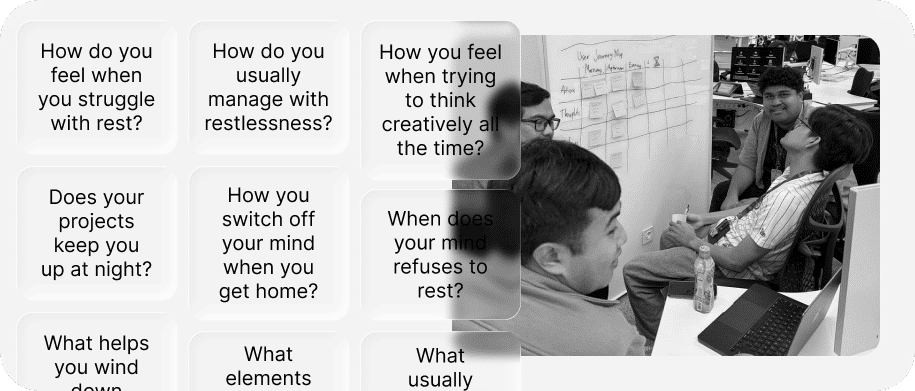
We started with self-reflection before user research. Each teammate had felt restlessness in different ways, giving us authentic empathy and helping us design solutions based on real experience, not assumptions.
Desk research
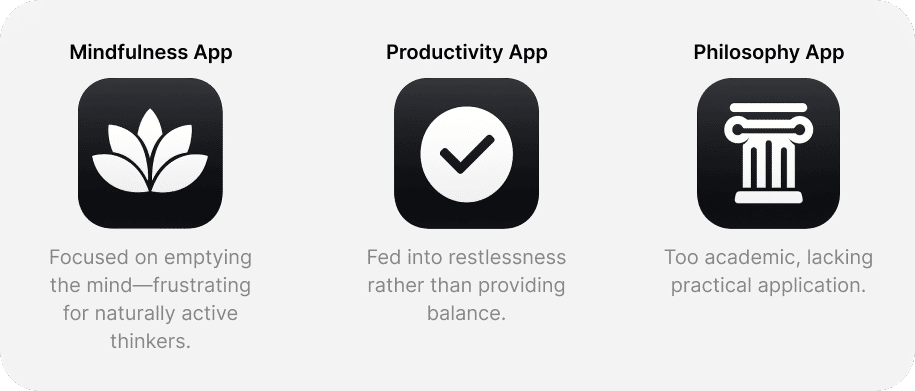
Competitive Analysis Gap
We analyzed existing mindfulness and productivity apps to understand market positioning:
Two Paths Forward
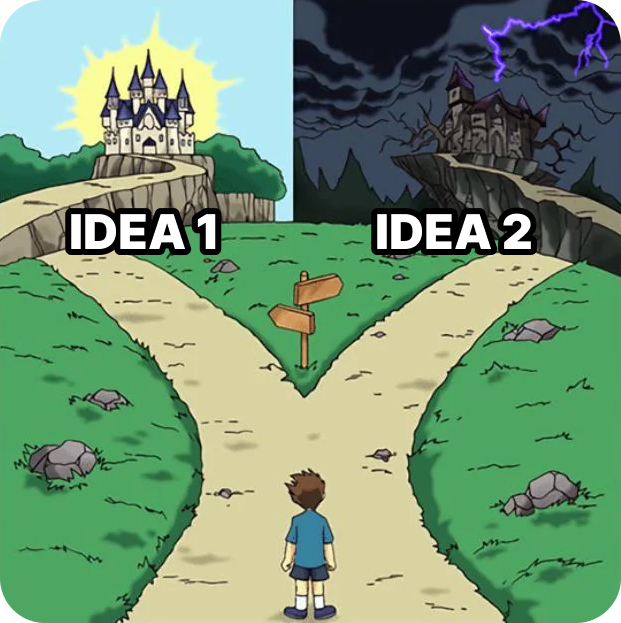
When reanalyzing the math tutor's situation, we identified two potential solutions:
- Productivity Enhancement: Tools to help create better lessons faster
- Restlessness Management: Help finding peace when work is done
We chose path 2 because the real problem wasn't productivity—it was the inability to rest and find mental balance.
User interview
Interviewing Restless Minds
.png?updatedAt=1759302250617)
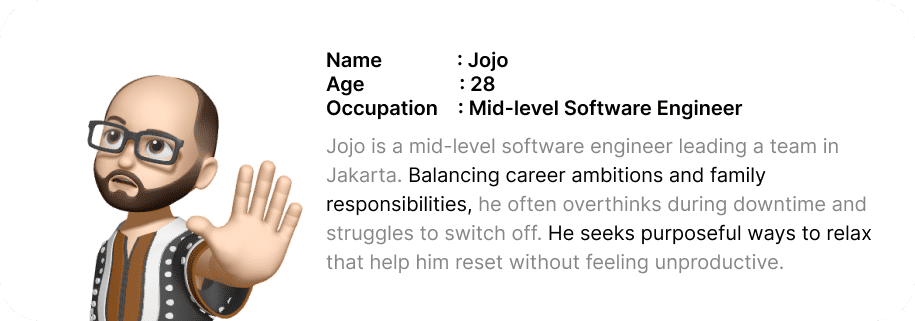
Resulting User Persona
Ideate
Why Stoicism?

After exploring psychology methods, meditation techniques, and productivity frameworks, Stoicism emerged as uniquely suited to our users' needs. Unlike approaches that suppress thoughts, Stoicism teaches thought reframing, perspective-building, and mental resilience.
Core Stoic Principles Applied:
Cross-Functional Ideation Process
Rather than designing in isolation, I facilitated design thinking sessions where all four team members—three developers and myself—sketched concepts and explored user flows together. This collaborative approach brought diverse perspectives while I guided design principles and user experience considerations.
Prototype
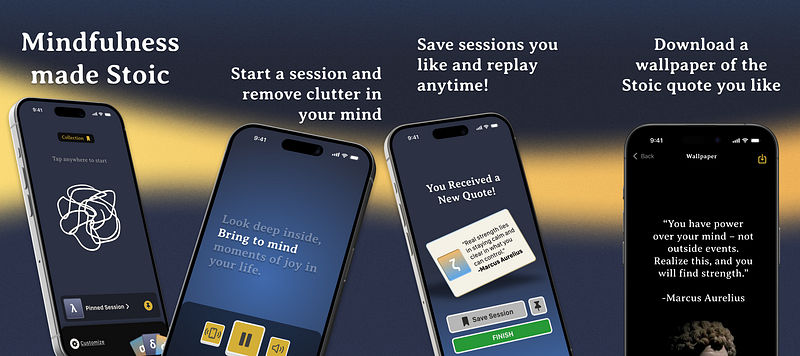
Collaborative Design Process
Instead of working as the sole designer, I taught basic design principles to the development team while learning iOS development from them. Everyone sketched wireframes and explored different approaches—some focused on simplicity, others on gamification, others on philosophical structure.
My role evolved from "sole designer" to design facilitator, helping merge four different visions into one cohesive experience while gaining hands-on coding experience in Xcode.
Design System and Principles
Unique Value Proposition: "Not silence, but perspective. Not emptiness, but clarity. Not detachment, but resilience."
Core Design Principles:
Final result
Key Features Delivered
Customizable Mindfulness Sessions
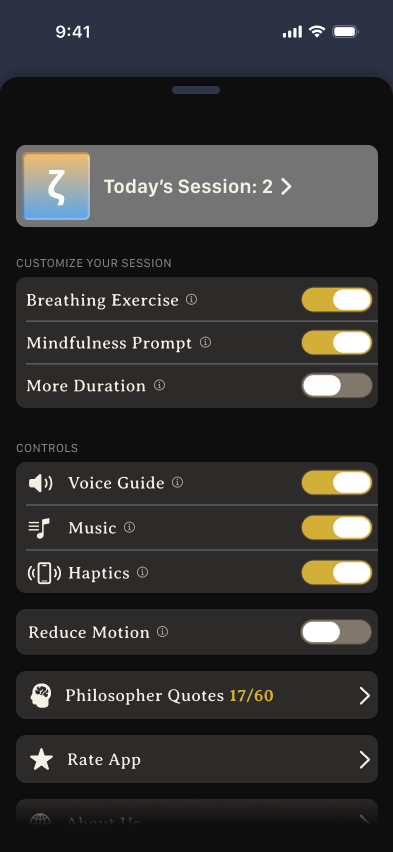
Each session combines breathing guidance with Stoic philosophy, featuring quotes from Marcus Aurelius, Seneca, and Epictetus with modern interpretations.
Quote Collection System

Users unlock new philosophical quotes with each practice, creating gentle motivation for consistent use while learning practical wisdom.
Downloadable Wisdom Wallpapers
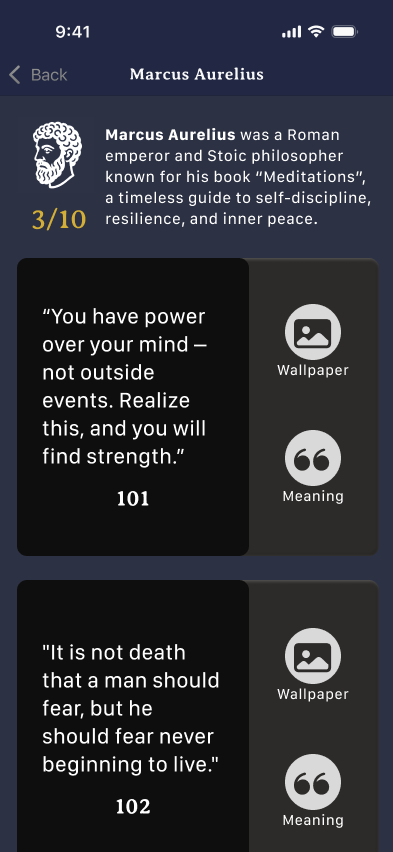
Every quote becomes a downloadable wallpaper, extending the mindfulness practice throughout users' daily phone interactions.
Accessibility-First Design
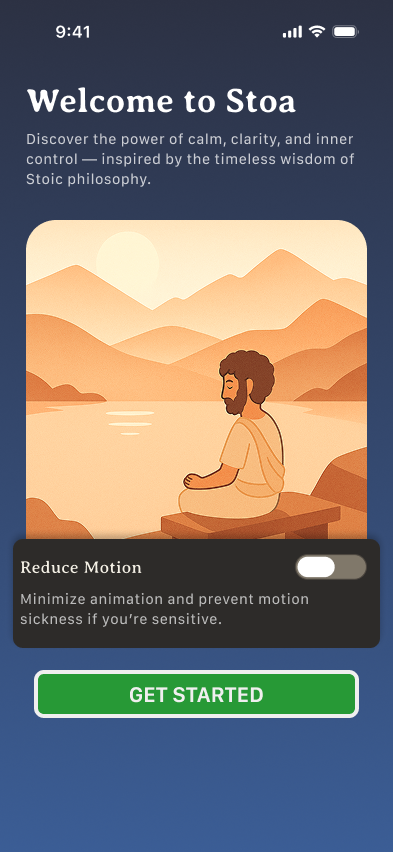
From the beginning, we prioritized inclusive design:
Reflections
Cross-Functional Learning Outcomes
This project changed how I design. By teaching developers design thinking and learning iOS myself, we built a more cohesive product. I gained technical insight; they gained user empathy.
Key Wins:
Next Steps:
Stoa shows how ancient philosophy can power modern, purpose-built mindfulness tools that work with the mind, not against it.